
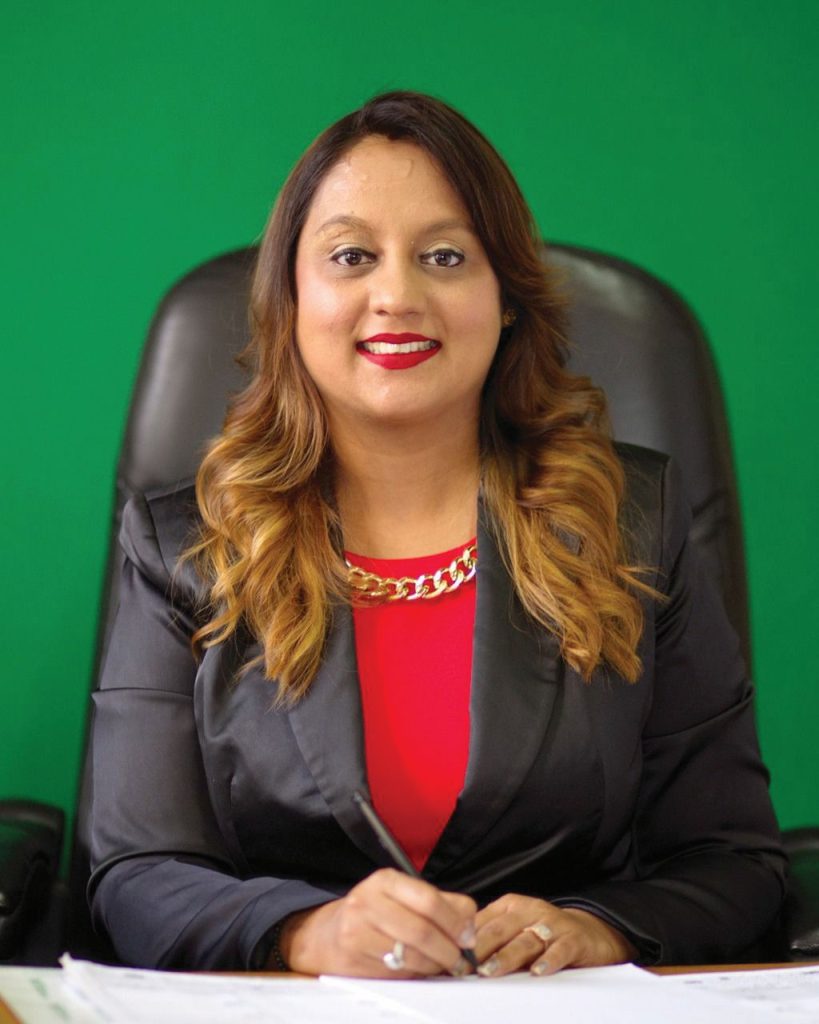
PM Persad-Bissessar’s warm reconciliation with Venezuela’s acting president contrasts sharply with heated parliamentary battles over government accountability measures.
Prime Minister Kamla Persad-Bissessar marked a significant diplomatic achievement at the UN General Assembly when she met with Venezuelan acting President Delcy Rodriguez. According to the Trinidad Guardian, the two leaders exchanged warm greetings and embraces, with Rodriguez reciprocating the Prime Minister’s expression of affection. The meeting resulted in an agreement for reciprocal state visits and restored Persad-Bissessar’s status as “Persona Grata” in Venezuela, signalling what observers describe as the beginning of a new chapter in bilateral relations.
The reconciliation carries practical implications for both nations. The Guardian reports that energy cooperation features prominently in the planned work agenda between the two governments. This timing is significant given that Proman announced workforce reductions due to uncertain gas supplies, underscoring the urgency of finalizing energy agreements between Trinidad and Tobago and Venezuela.
Yet the Prime Minister’s diplomatic success stands in sharp contrast to turbulent domestic politics. The government has proposed amendments to procurement legislation—specifically the Public Procurement and Disposal of Public Property (Amendment) Bill 2026—designed to accelerate project delivery and potentially favour smaller contractors. The Guardian notes that these amendments would introduce financial penalties for frivolous or bad-faith procurement challenges, though critics worry such measures could discourage legitimate whistleblowing. The government seeks exemptions for the Energy, Housing, and National Security Ministries, suggesting major projects are queued for development.
The legislative battle has exposed deeper tensions within Trinidad’s parliamentary system. Nine independent senators appointed by President Christine Kangaloo refused to support a related bill, prompting the Senate President to cast a tie-breaking vote in favour of the government. The Prime Minister’s response was notably harsh, using inflammatory language to describe the independent senators. According to the Guardian, Persad-Bissessar called them “scumbags,” “satanic,” and “demons,” signalling her expectation that neither President Kangaloo nor her appointed senators will serve beyond 2028.
The columnist raises fundamental questions about Trinidad’s approach to governance and accountability. The Public Procurement Act itself was proclaimed in 2015 under the People’s Partnership government led by the same Prime Minister who now views it as overly restrictive. This shift raises questions about whether citizens support legislation based on principle or partisan affiliation. The columnist also examines the role of the Senate President, whose tie-breaking vote reflected party loyalty rather than the Westminster parliamentary tradition of impartiality that guided his predecessor, Ganace Ramdial, during the Basdeo Panday era.
Trinidad and Tobago’s Senate includes nine independent senators appointed by the President. The Public Procurement and Disposal of Public Property Act, enacted in 2015, established the Office of the Procurement Regulator (OPR) to review government contracts. The current government views these oversight mechanisms as impediments to efficient project delivery, while opposition figures and independent senators argue they are essential safeguards against corruption and favouritism.
This story reflects broader Caribbean governance challenges around balancing efficient public service delivery with institutional accountability. The tension between executive power and parliamentary oversight, the role of independent institutions, and questions about whether democratic principles are applied consistently regardless of which party holds power are issues affecting multiple Caribbean nations.
Written & Edited by Orlyn Edwards. Published by Caribbean Air Force Media.
Category: News · Island routing: Trinidad & Tobago