
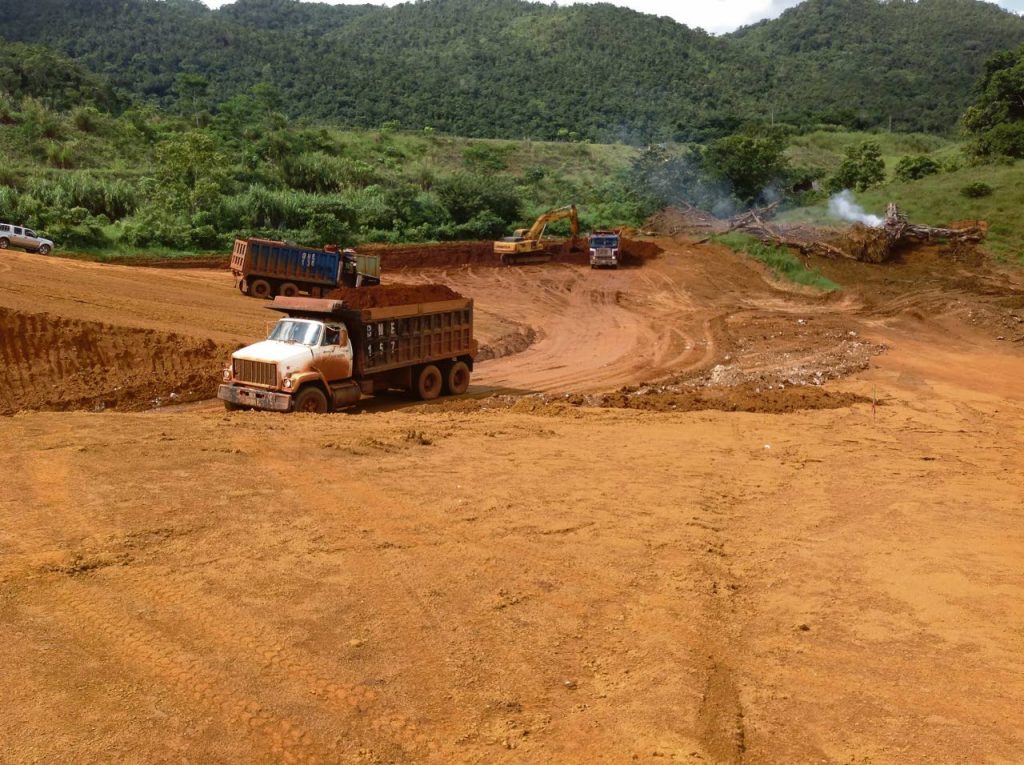
Jamaica’s Senate has passed legislation allowing recognised bauxite and alumina producers to import liquefied natural gas without paying customs duties, provided the fuel is used in their operations. The government frames the measure as essential to reducing production costs and helping the industry compete globally, particularly as Jamaica’s share of global bauxite output has declined from roughly 18 per cent in the 1970s to 1.4 per cent by 2024.
However, Opposition Senator Donna Scott-Mottley seized on the debate to press a broader argument: that cost relief for companies should not eclipse the government’s responsibility to secure the full financial benefits Jamaica is owed from the sector. According to the Jamaica Observer, Scott-Mottley told the Senate that while bauxite contributes substantially to the economy, "it can contribute much much more," and that the government must pursue outstanding payments with the same determination it applies to individual taxpayers. She suggested collected revenues could be earmarked for specific programmes such as education, allowing their impact to be measured.
Scott-Mottley also highlighted the rehabilitation of mined-out lands, noting that 264.40 hectares remained unrestored despite mining regulations amended in 2004 that required reclamation within two years. She pointed to successful agricultural use of reclaimed areas in Manchester and St Elizabeth, where crops including yam, peanut, and cassava have been grown. Government Senator Kamina Johnson Smith later clarified that outstanding penalties related to quarrying rather than bauxite operations, and that the matter was under review by Parliament’s Public Accounts Committee.
On profit-sharing arrangements, Johnson Smith reported that US$15 million had been collected between December 2024 and October 2026, with recovery efforts continuing on the outstanding balance. The debate also surfaced longstanding grievances from families awaiting land titles connected to bauxite mining and resettlement schemes, with some applicants struggling to complete documentation after relatives’ deaths. Johnson Smith indicated that just over 2,000 titles remained outstanding as of September 2026, though 1,078 had been issued between January 2020 and September 2026 alone.
Government Senator Kavan Gayle supported the LNG exemption but argued that companies should be required to make reciprocal improvements, including equipment upgrades and workforce skills development. He suggested the concession’s impact be assessed after five years to determine whether it had genuinely improved competitiveness. The amendment extends a customs exemption dating to 1950, when Jamaica’s bauxite industry was being developed, to now cover LNG used in mining, extraction, and alumina production.
Jamaica’s bauxite industry has been central to the economy for decades, though its global market share has contracted significantly. The sector faces competition from lower-cost producers and has grappled with environmental rehabilitation obligations and land title disputes affecting communities in mining regions.
Jamaica’s bauxite sector remains a cornerstone of the Caribbean’s mining economy and a major employer in rural communities. The debate over balancing industry incentives with government revenue collection and environmental restoration reflects broader Caribbean tensions between attracting foreign investment and ensuring equitable national benefit from natural resource extraction.