
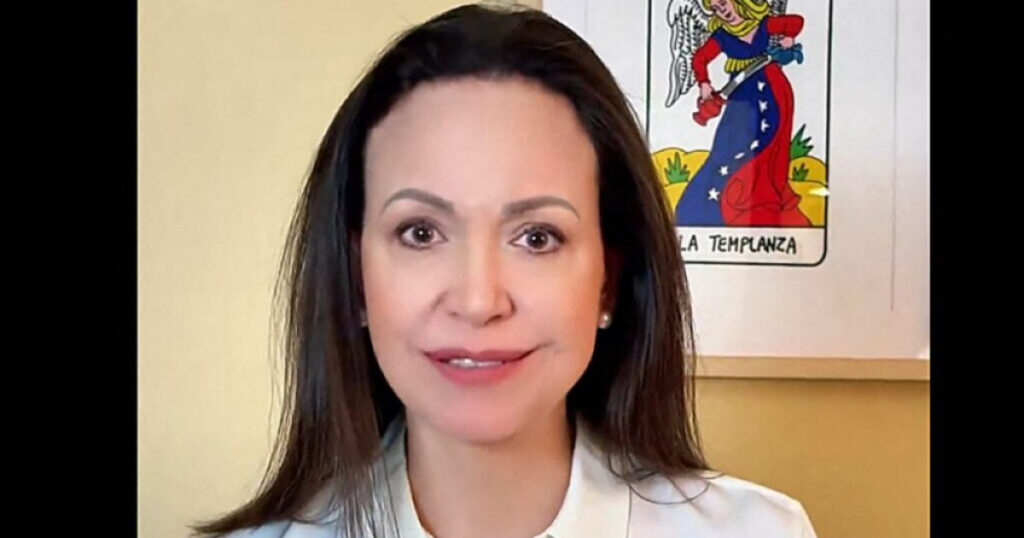
Exiled leader reaffirmed as opposition figurehead as coalition presents roadmap for elections and democratic reform.
An alliance of Venezuelan opposition parties has moved to strengthen its position by formally reaffirming exiled Nobel Peace Prize laureate Maria Corina Machado as its leader, according to reporting from AFP. The announcement, made public on Sunday as part of a new “Grand National Agreement,” comes as the opposition seeks to increase pressure on interim authorities to allow Machado’s return from Panama, where she has been living since 2025.
Machado, who has remained outside Venezuela since covertly departing to receive her Nobel Peace Prize, participated virtually in the coalition’s Caracas meetings. Members of the opposition’s Unitary Democratic Platform formally recognized and endorsed her leadership, even as she has stated she will not interfere with ongoing political transition talks between an opposition faction and the interim government. Those negotiations have the backing of Washington and follow the January ouster of longtime leader Nicolas Maduro, who was captured by US military forces and flown to stand trial in New York.
The coalition presented an ambitious agenda for democratic renewal, putting forward 14 proposals that include a roadmap for holding general elections, the unconditional release of all political prisoners, an end to political repression, and the restoration of exiles’ right to return home. The alliance also called for full freedom for political parties, the lifting of bans on candidates running for office—a restriction that has notably affected Machado—and measures to protect human rights. Machado’s own party is pushing for elections to be held sometime in the coming year.
Despite her formal reaffirmation as opposition leader, Machado has faced repeated obstacles to her return. According to her party, she has attempted to come home at least seven times but has been blocked by Venezuelan authorities. Some observers suggest Washington may be playing a role in those restrictions, given President Donald Trump’s public satisfaction with the current interim government led by Delcy Rodriguez, Maduro’s former deputy. US officials have denied such claims.
Machado has continued to express gratitude toward the Trump administration, crediting the president with “opening a door to progress toward freedom, democracy and true sovereignty” through Maduro’s capture. The opposition’s push for democratic reforms and elections represents a significant moment in Venezuela’s political transition, though the interim government has not yet committed to a specific timeline for holding a vote.
Nicolas Maduro led Venezuela for years before his January 2026 capture by US military forces. His deputy, Delcy Rodriguez, assumed interim power and has governed under significant pressure from Washington. The opposition has been working through multiple channels to shape Venezuela’s political future, with various factions engaged in transition talks with the interim authorities.
Venezuela’s political crisis and democratic transition directly affect Caribbean stability and regional migration patterns. The outcome of these negotiations will influence the flow of Venezuelan migrants throughout the Caribbean, including to Jamaica and other island nations already managing significant refugee and asylum populations. The restoration of democratic governance in Venezuela could reshape regional geopolitics and economic conditions across the Caribbean basin.
Sources and attribution
- Jamaica Observer
- Venezuela opposition renews support for Maria Corina Machado as leader
- What we know about a US strike that captured Venezuela's …
- US captures Maduro after strikes on Venezuelan capital …
- U.S. Capture of Venezuela's Nicolás Maduro
Written & Edited by Orlyn Edwards. Published by Caribbean Air Force Media.
Category: News · Island routing: Jamaica