
EDITORIAL REVIEW REQUIRED — EXPRESS DRAFT. This is an unpublished draft. Some claims may be unconfirmed. Check dates, sources, claims, photographs, and video rights before publishing.
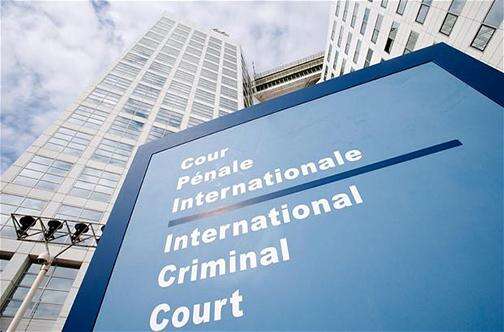
The Trump administration escalated its long-standing confrontation with the International Criminal Court on Friday by announcing comprehensive sanctions designed to restrict the tribunal’s financial and operational capacity. Secretary of State Marco Rubio framed the action as necessary to protect American officials and military personnel from prosecution by a court the United States has never joined, according to reporting from the Jamaica Observer citing AFP.
Rubio’s statement contained stark language about the administration’s intentions, declaring that either the ICC would cease what Washington characterizes as threats to American interests or face dismantling. The sanctions announcement included a notable provision: a six-month grace period during which the court’s member states could demonstrate what the State Department called "meaningful progress" on addressing US concerns. Officials indicated this timeline could be adjusted based on whether those efforts succeeded or failed.
The timing of the sanctions drew immediate attention, arriving on the same day the Norwegian Nobel Committee awarded the Peace Prize to Navi Pillay, an 85-year-old South African jurist with deep connections to international criminal justice. Pillay previously chaired the Rwanda genocide tribunal, served as an ICC judge, and later led a UN commission that concluded Israel had committed genocide in Gaza—a finding that has made her a target of criticism from those opposing ICC investigations.
The international response to the American action was swift and largely critical. Canada, France, Germany, Japan, and the United Kingdom issued a joint statement expressing strong disagreement, while UN Secretary-General António Guterres characterized the move as "a serious blow" to international criminal justice. The European Union called the sanctions "deeply regrettable" but signaled openness to dialogue, with the European Commission suggesting the six-month delay created space for negotiation.
Israeli Prime Minister Benjamin Netanyahu, who faces an ICC arrest warrant related to alleged crimes in Gaza, praised the American action and used the occasion to attack the court’s legitimacy. The Trump administration had previously sanctioned 17 individuals connected to the ICC, including its prosecutor and several judges, and has repeatedly called on member states to withdraw from the organization. Amnesty International urged countries to resist what it characterized as an effort to isolate and ultimately destroy the tribunal.
The United States has maintained a contentious relationship with the International Criminal Court since its establishment. Washington has never ratified the Rome Statute that created the court and has historically resisted the notion that American officials could face prosecution by an international body. The Trump administration’s opposition intensified following ICC investigations touching on American interests and those of Israel, a close US ally that is also not a member of the court.
Sources and attribution
- Jamaica Observer
- US imposes sanctions on ICC hours after former judge …
- 'Serious blow': Guterres condemns new US sanctions on …
- US announces sanctions on ICC, hours after Nobel award …
- US unveils sanctions on ICC in move court condemns as …
- Nobel Peace Prize 2026 – Press release – NobelPrize.org
- Former ICC judge Navi Pillay wins 2026 Nobel Peace Prize
- www.bbc.co.uk · news · articlesNavi Pillay, former UN human rights chief, wins Nobel Peace Prize…
- Nobel Peace Prize goes to South African human rights pioneer Navi Pillay
CVCA Express Draft: verification pending; WordPress publication is manual.