
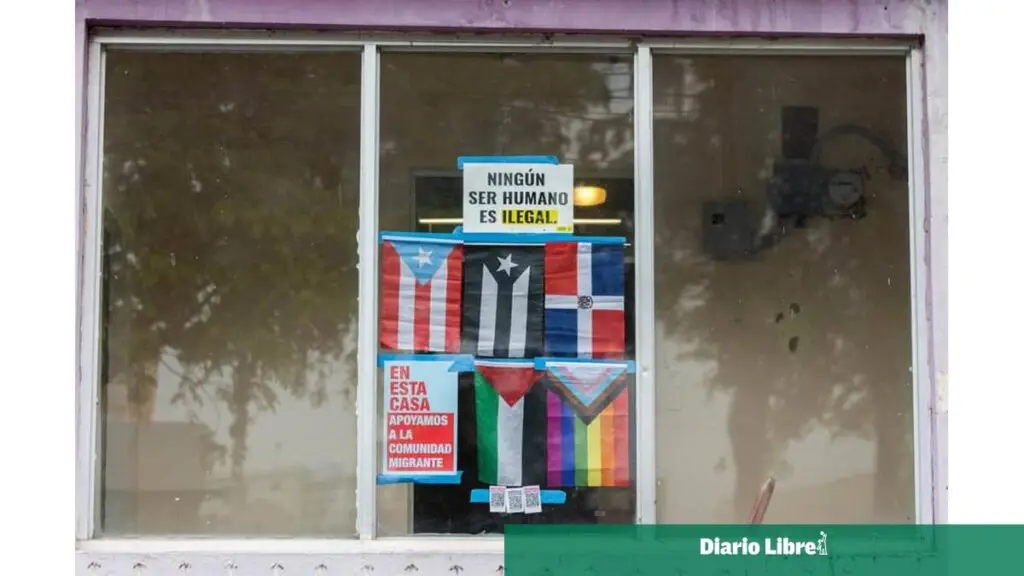
Puerto Rico’s Department of Transportation and Public Works (DTOP) transferred confidential information on immigrants to U.S. Immigration and Customs Enforcement (ICE) in 2025, according to reporting by Diario Libre. The data included details on more than 6,000 individuals with addresses across 68 municipalities throughout the island.
The transfer followed a formal request from ICE’s Homeland Security Investigations (HSI) office on January 26, 2025, seeking all records related to driver’s licenses, learner permits, and identification cards issued to people with irregular immigration status. The request was directed to Puerto Rico’s Driver Services Directorate (DISCO).
Many of those affected held provisional licenses granted under Puerto Rico’s Law 97 of 2013, which allowed foreign nationals without official immigration status to obtain driving credentials if they met certain requirements. According to Diario Libre, approximately 20,000 individuals held such licenses, with an estimated 55,000 Dominicans living on the island as of 2025, though the exact number of undocumented residents remained unclear at that time.
The disclosure has raised concerns among civil rights advocates. The American Civil Liberties Union (ACLU) of Puerto Rico obtained documents detailing the government’s compliance with the federal request, highlighting the privacy implications for vulnerable immigrant communities who sought to obtain legal driving privileges.
Puerto Rico’s provisional driver’s license program, established in 2013, was designed to allow undocumented immigrants to obtain driving credentials while meeting road safety requirements. The program had become particularly significant for the Dominican community on the island, which represents a substantial portion of Puerto Rico’s immigrant population.
This development directly affects Dominican and other Caribbean nationals living in Puerto Rico. The data transfer raises concerns about privacy protections for undocumented Caribbean migrants who sought legal driving privileges, and reflects broader tensions between local government services and federal immigration enforcement across the Caribbean diaspora.