
EDITORIAL REVIEW REQUIRED — EXPRESS DRAFT. This is an unpublished draft. Some claims may be unconfirmed. Check dates, sources, claims, photographs, and video rights before publishing.
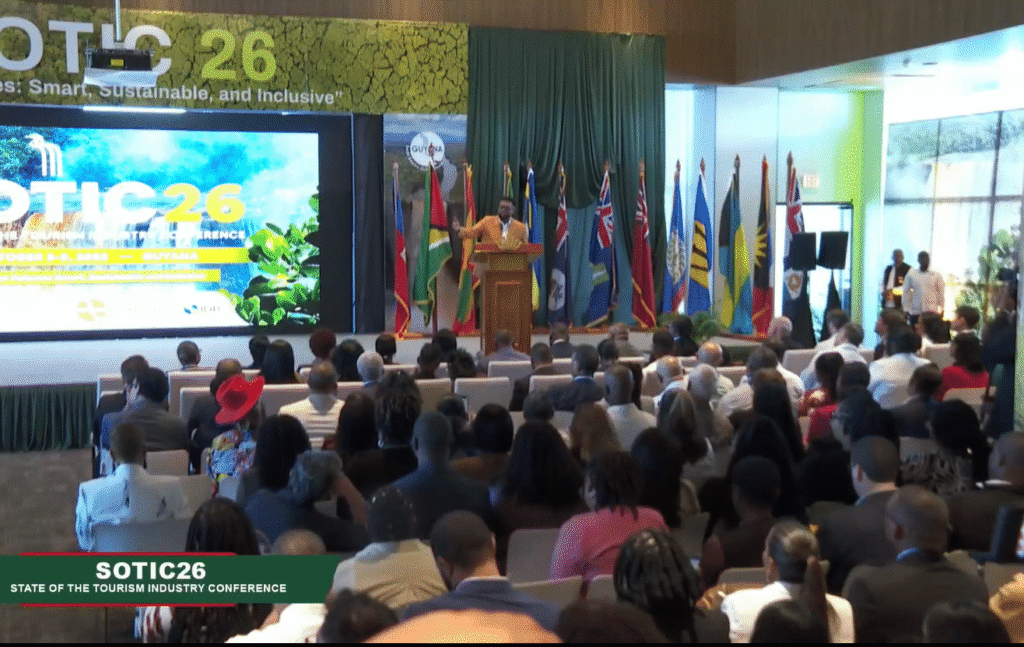
President Irfaan Ali has delivered a pointed critique of Caribbean tourism investors, accusing them of resting on the region’s natural advantages rather than pursuing the aggressive infrastructure development needed to compete in a rapidly evolving global market. Speaking at the Caribbean Tourism Organisation’s State of the Tourism Industry Conference (SOTIC) 2026, Ali emphasized that complacency poses a serious threat to the region’s economic future.
According to Demerara Waves, the Guyanese leader highlighted the stark contrast between Caribbean and Middle Eastern approaches to tourism. While Middle East nations have channeled substantial resources into marketing, branding, and hosting major international events—from sporting competitions to concerts and theme parks—the Caribbean has largely relied on its natural beauty without making comparable investments in infrastructure or promotion. Ali suggested that Caribbean nations could collectively target hosting ten major global events by 2035, positioning themselves as serious competitors in the high-value tourism sector.
Ali proposed that the region explore strategic partnerships with wealthy Middle Eastern countries, particularly Saudi Arabia, to gain access to capital and expertise for developing world-class facilities. He cited Guyana’s willingness to provide land and resources for a first-world-class tropical forest night safari as an example of the kind of ambitious project the region should pursue. The president also advocated for integrating Caribbean transportation infrastructure to improve connectivity and competitiveness, noting that the region had previously missed opportunities to build stronger ties with Latin American markets by failing to prioritize Spanish language education.
Beyond tourism, Ali announced that Guyana will host the 2nd Global Biodiversity Alliance summit next month and has formally applied to host the Conference of the Parties (COP) 2030, the United Nations Climate Change Conference. He also praised Barbados for its development of a marina and upscale resort near the Kensington Oval, signaling that selective regional initiatives can serve as models. Ali, a former tourism minister himself, urged the Caribbean Tourism Organisation to negotiate contingency provisions in agreements to address natural disasters proactively rather than reactively.
The Caribbean Tourism Organisation’s State of the Tourism Industry Conference brings together regional stakeholders to discuss long-term investment strategies and sectoral development. The conference occurs as the Caribbean faces increasing competition from Middle Eastern destinations that have leveraged oil wealth to create luxury hospitality infrastructure and attract major international events. The region’s tourism sector remains economically vital for many Caribbean nations, making strategic positioning and investment critical to sustained growth.
This story is directly relevant to Caribbean audiences and diaspora communities invested in regional economic development. Tourism is a cornerstone industry for many Caribbean nations, and Ali’s call for modernization and strategic partnerships addresses a fundamental challenge facing the region’s competitiveness. The discussion of infrastructure integration, language policy, and regional cooperation speaks to broader questions about Caribbean unity and economic strategy that affect employment, foreign exchange earnings, and long-term prosperity across the region.
Sources and attribution
- Demerara Waves Online News- Guyana
- Pres Ali urges Caribbean to scale up tourism investment
- 2nd GBA conference: Pres Ali proposes “solution labs” among …
CVCA Express Draft: verification pending; WordPress publication is manual.