
EDITORIAL REVIEW REQUIRED — EXPRESS DRAFT. This is an unpublished draft. Some claims may be unconfirmed. Check dates, sources, claims, photographs, and video rights before publishing.
The Privy Council has handed down a historic ruling that declares Trinidad and Tobago’s laws criminalizing consensual same-sex relations unconstitutional. The decision, announced on November 10, came after gay activist Jason Jones successfully appealed a 2025 Court of Appeal reversal of his initial 2018 High Court victory challenging sections 13 and 16 of the country’s Sexual Offences Act.
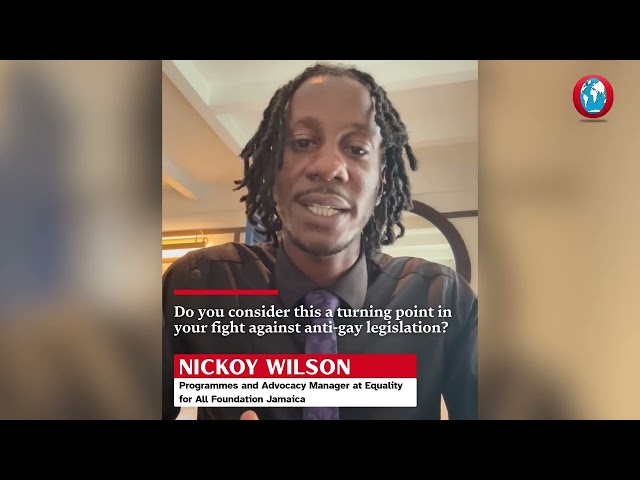
Jamaican LGBTQ+ advocates have seized on the ruling as a watershed moment for the region. According to the Equality for All Foundation Jamaica, the Privy Council decision represents the first time anti-sodomy laws have reached the region’s final appellate court from a Caribbean jurisdiction. Nickoy Wilson, the foundation’s Programmes and Advocacy Manager, emphasized that the ruling affirms the principle that same-sex couples deserve the same legal protections and respect as heterosexual couples.
The Trinidad and Tobago victory has thrown a spotlight on Jamaica’s own legislation, particularly sections 76, 77, and 79 of the Offences Against the Person Act, which criminalize buggery, attempted buggery, and gross indecency between men. However, Wilson cautioned that Jamaica’s distinct constitutional provisions mean the Privy Council ruling cannot be directly applied to overturn local laws. This reality was underscored in 2023 when Jamaica’s Supreme Court dismissed a constitutional challenge brought by attorney Maurice Tomlinson, citing the constitution’s savings law clause as a barrier to examining the provisions’ constitutionality. Tomlinson has since appealed to the Privy Council.
Wilson argued that the Trinidad and Tobago decision should serve as an urgent call to action for Jamaica’s government and parliament. He warned that Jamaica risks becoming isolated as other Caribbean territories move toward decriminalization, whether through court rulings or legislative action. The reluctance of parliamentarians to repeal colonial-era laws has forced LGBTQ+ advocates across the region to pursue legal challenges instead of seeking legislative reform.
While welcoming the Privy Council’s decision, Wilson stressed that it should not be mistaken for an immediate transformation in circumstances for Jamaica’s LGBTQ+ community. Instead, he framed it as encouragement to sustain advocacy efforts and potentially mobilize additional community members to join the ongoing fight for human rights and legal equality.
Jamaica’s anti-sodomy laws date to the colonial era and remain among the strictest in the Caribbean. The country’s constitutional framework includes a savings law clause that has prevented courts from striking down the legislation on constitutional grounds, forcing advocates to pursue appeals to the Privy Council as an alternative path to legal change.
This ruling directly affects Jamaica and other Caribbean nations still criminalizing same-sex relations. The Privy Council decision establishes a legal precedent that could influence future challenges across the region and signals that Caribbean courts are increasingly recognizing LGBTQ+ rights, putting pressure on Jamaica to modernize its laws or risk falling behind regional peers.
Sources and attribution
- Jamaica Observer
- The Attorney General of Trinidad and Tobago and others v Jason Jones (Trinidad & Tobago)
- Privy Council judgment decriminalises consensual same-sex intimacy in Trinidad & Tobago
- British appellate court strikes down Trinidad and Tobago sodomy law
- Trinbagonian Jason Jones wins landmark Privy Council judgement deeming ‘buggery laws’ unconstitutional
CVCA Express Draft: verification pending; WordPress publication is manual.