
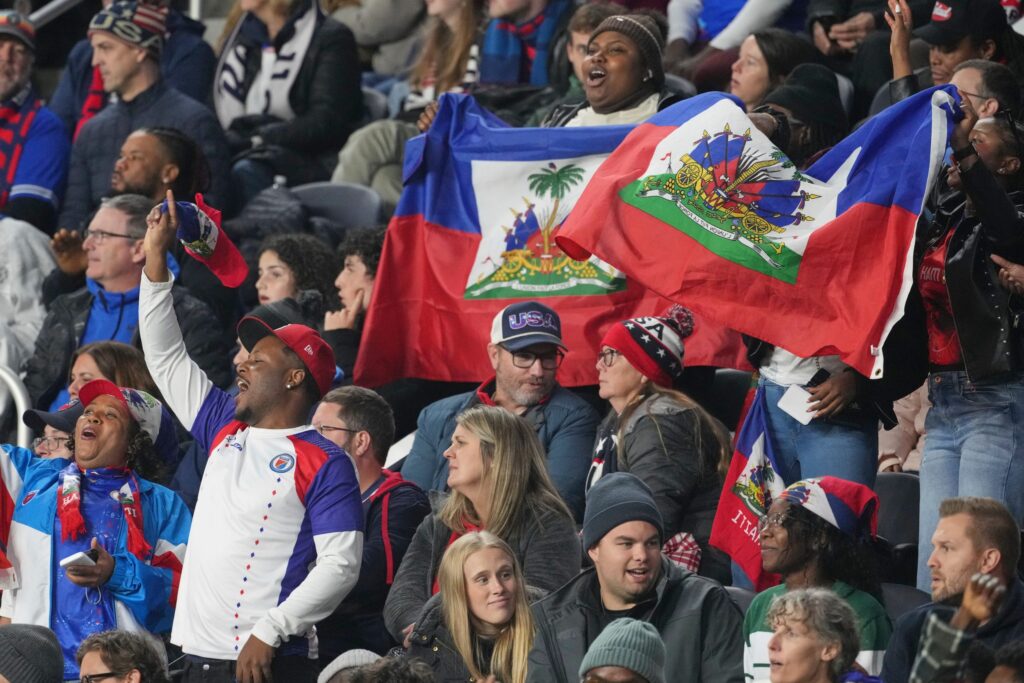
Haiti’s Grenadiers fell to the United States 2-0 in a Concacaf Nations League match at Cincinnati’s TQL Stadium on Tuesday night, but for the thousands of fans who traveled from across the Midwest, the evening represented something far more significant than the final scoreline. According to The Haitian Times, attendees draped in blue and red waved Haitian flags and embraced one another, demonstrating a powerful display of cultural pride and community connection.
The gathering held particular resonance given the current climate facing Haitian immigrants in Ohio. The match offered a rare opportunity for Haitians across the region to celebrate their identity publicly amid heightened immigration enforcement concerns and anti-Haitian rhetoric. TQL Stadium sits approximately 16 miles from an Immigration and Customs Enforcement office in suburban Blue Ash, a proximity that weighed on some attendees’ minds. Yet fans from Indiana, Illinois, Chicago and across Ohio made the journey, determined to witness their national team compete on American soil.
For many, the experience transcended athletics. Claude Darrisson traveled from Indiana with his family, marking his five-year-old son’s first opportunity to watch Haiti’s national team in person—a moment he described as a meaningful connection to their cultural heritage despite the disappointing outcome. Alex-May Brutus, who drove from Cleveland, noted that the celebration continued before, during and after the match, with fans proudly displaying Haitian jerseys and flags throughout the evening.
The event also carried emotional weight for some attendees. One fan reflected on a young Springfield resident whose death by suicide had affected the community, noting that the gathering represented a historic moment for Haitians to celebrate their identity openly and proudly. Charisma Dupré, who drove from Chicago specifically to demonstrate solidarity with the Haitian community, emphasized that the occasion extended beyond soccer—it was about standing with their people during a challenging period.
While some fans expressed disappointment with the team’s consecutive losses, others stressed that the evening’s significance lay in the strength and unity demonstrated by the community. Stephanie Louis, of Michigan, captured the sentiment as fans danced to kompa and rara music after the final whistle: "No matter the score, the number of fans or what people say about us as Haitians, we will rise. Today’s loss should not define the strength within us."
Haiti now faces a two-leg playoff against Nicaragua in March to earn a spot in the 2027 Gold Cup. The Grenadiers hold a strong record against their Central American opponents, having won four of their last five encounters, including a 5-0 aggregate victory during the 2026 World Cup qualifiers.
Haiti competes in the Concacaf Nations League, a regional soccer competition. The match took place amid broader concerns about immigration enforcement affecting Haitian communities throughout Ohio, particularly in Springfield, where heightened enforcement activities have created anxiety among residents. The 2027 Gold Cup is Concacaf’s flagship tournament, and Haiti must secure qualification through playoff competition.
This story directly reflects the diaspora experience of Haitians in the American Midwest, highlighting how sports and cultural gatherings serve as vital spaces for community identity and solidarity during periods of heightened immigration enforcement and anti-Haitian sentiment. The match demonstrates the resilience of Caribbean diaspora communities and their commitment to celebrating heritage even amid challenging circumstances.