
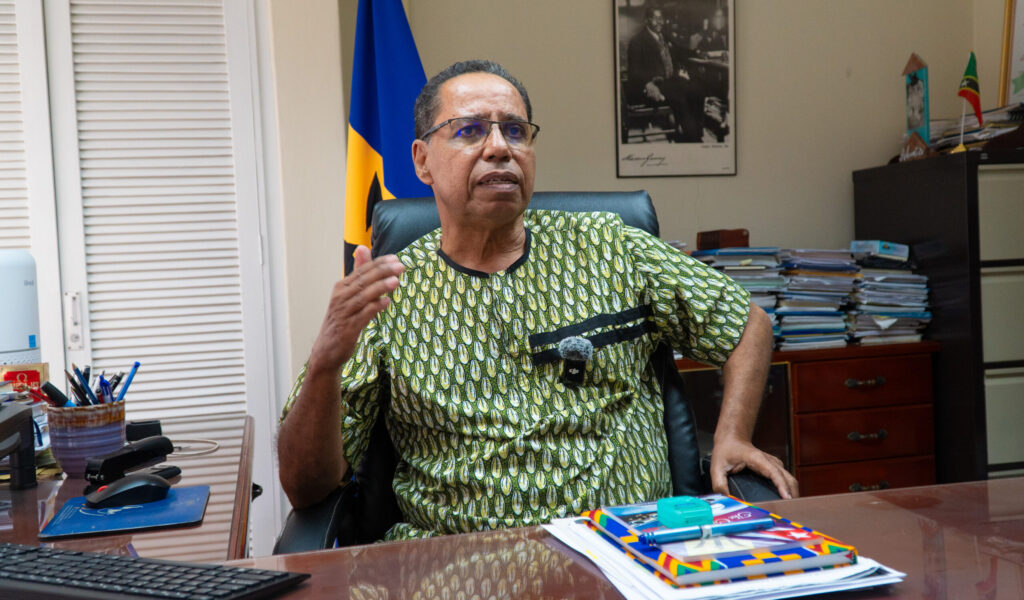
Barbados’ Ambassador to CARICOM David Comissiong has pushed back against a deeply held but historically inaccurate belief: that Barbadians are not a people inclined to migrate. Speaking to Barbados Today, Comissiong argued that the island’s post-emancipation history tells a very different story—one of ambitious islanders seeking opportunity far beyond their shores and leaving indelible marks on societies across the Caribbean, the Americas, and Africa.
The ambassador traced the roots of this migration wave to the difficult conditions that followed emancipation. With a densely populated island, scarce access to land, and an economy tightly controlled by sugar plantations, many Barbadians saw little hope of building better lives at home. Between 1860 and 1920, historian Professor Winston James estimated that some 140,000 Barbadians departed, with more than 100,000 establishing themselves permanently overseas. They carried with them skills honed in the sugar industry and a determination to succeed, settling in destinations including Guyana, Trinidad, Panama, Cuba, Venezuela, Colombia, and Brazil.
Comissiong highlighted the outsized influence these migrants wielded in their adopted homes. He pointed to Barbadian settlers who arrived in Liberia in 1865 and whose descendants rose to extraordinary prominence, including three who became president, alongside judges, secretaries of state, and educators. "In virtually every Caribbean territory, you will find evidence of Barbadian migration," the ambassador noted, emphasizing that the island’s strong educational tradition enabled many migrants to ascend to leadership across business, the professions, and public life.
The ambassador argued that this migration narrative began to shift in the mid-20th century. Following the pivotal 1937 labour rebellion and the social and political reforms that followed, living conditions in Barbados improved substantially, reducing the economic desperation that had long driven islanders to seek their fortunes elsewhere. Yet Comissiong stressed that recognizing this diaspora heritage remains vital to national identity. "Your heritage is international," he told Barbadians, urging them to see the accomplishments of their migrant ancestors not as loss, but as part of the nation’s enduring legacy.
Barbados has a long history of outward migration, particularly in the century following emancipation in 1838. The island’s limited land availability, dense population, and sugar-dominated economy created conditions that pushed many Barbadians to seek opportunities in other Caribbean nations, Latin America, and beyond. This diaspora has historically played significant roles in the development of their adopted countries.
This story directly addresses Barbadian identity and the broader Caribbean experience of migration and diaspora. Understanding Barbados’ own migration history—and the contributions Barbadians made to building other Caribbean and Latin American societies—enriches the region’s understanding of interconnection and shared heritage. It also challenges stereotypes about which Caribbean nations are sources of migration versus destinations.