
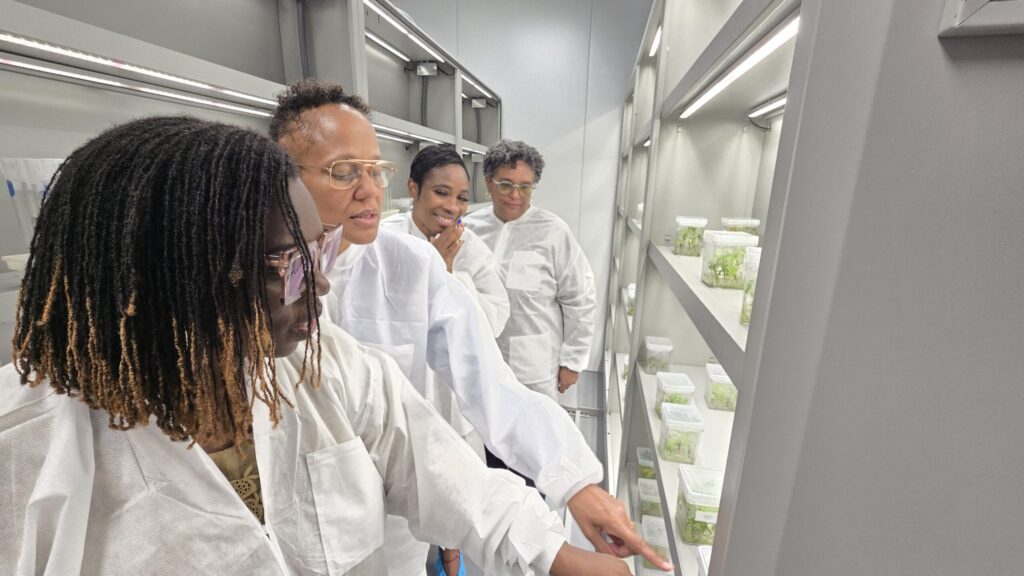
The Ministry of Agriculture, Food and Nutritional Security officially opened its new Plant Tissue Culture Laboratory on Friday at the Home Agricultural Station in St Philip, according to Barbados Today. The facility represents a dramatic scaling up of the island’s plant propagation capacity, with the ability to produce more than 500,000 plantlets annually—a tenfold increase from the previous laboratory’s output of 40,000 plants per year.
Prime Minister Mia Mottley framed the investment as central to Barbados’ response to climate change and food supply disruptions. She emphasized that the new laboratory would produce disease-free, genetically uniform, and climate-resilient plantlets across a wider range of crops than its predecessor, which operated for 32 years beginning in 1994. The original facility initially served the cut-flower industry before shifting focus to disease-free planting material for food crops, particularly sweet potato and cassava.
The advanced micropropagation techniques employed by the new facility address limitations of traditional propagation methods, according to laboratory director Dr Sophia Marshall. She noted that changing climate patterns, evolving pests, and growing demand for consistent, high-yielding crops necessitated the technological upgrade. The facility will support the government’s crop escalation programme, which has identified 15 priority crops for production expansion.
Mottley connected food security directly to public health outcomes, arguing that greater availability of fresh root crops and vegetables could reduce household expenditure on processed foods, supplements, and vitamins. She also announced plans for a veterinary laboratory and general analytical laboratory in the next fiscal year, and indicated the germplasm facility would serve the wider Caribbean region.
Minister of Agriculture Dr Shantal Munro-Knight stressed the collaborative nature of the initiative, inviting farming community members to the opening ceremony and emphasizing that agricultural transformation requires regional cooperation. Mottley also used the occasion to encourage secondary students from St Cyprian’s Boys’ School to pursue careers in agricultural science, announcing a personally funded essay competition with tablet prizes and proposing a project-based competition for Foundation School students focused on food security themes.
The original Plant Tissue Culture Laboratory opened in 1994 to support Barbados’ cut-flower industry, initially focusing on anthuriums and orchids. Over three decades, its mission evolved toward producing disease-free planting material for food crops. The decision to build a new facility followed a 2023 ministry request for funding to address contamination problems in the existing laboratory, which Prime Minister Mottley determined could not meet the island’s growing planting material needs.
As a small island developing state, Barbados faces acute vulnerability to climate disruption and food import dependence. This investment in agricultural research capacity and climate-resilient crop varieties addresses challenges shared across the Caribbean region. The government’s stated intention for the facility to serve the wider Caribbean suggests potential for knowledge-sharing and plant material distribution across island nations facing similar food security pressures.