
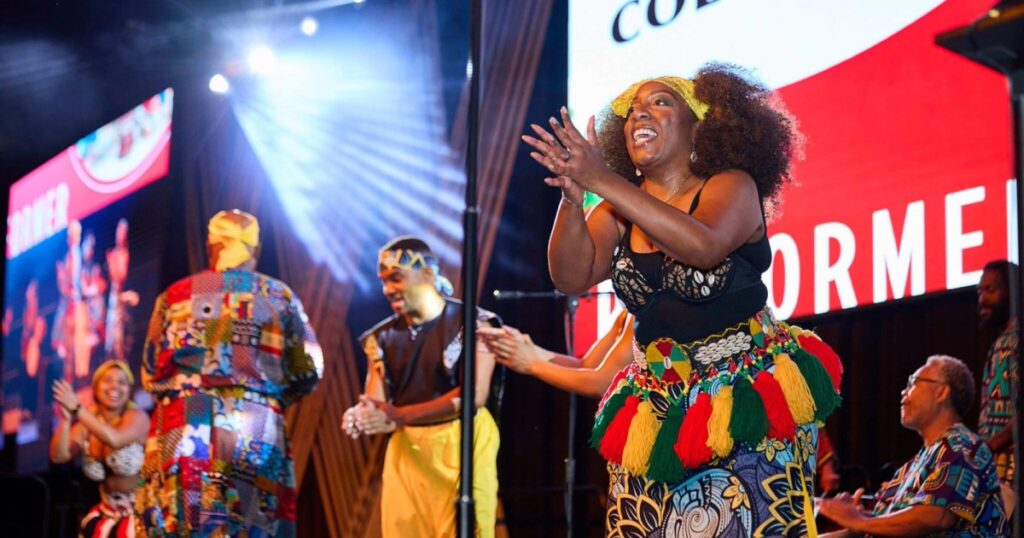
The 2026 midterm elections delivered watershed moments for Black political representation in the South, with Georgia electing Keisha Lance Bottoms as the first Black woman governor in U.S. history and Mississippi sending Scott Colom to the Senate as the state’s first Black senator since Reconstruction. The victories sparked celebration among racial justice advocates, but the mood at the Facing Race conference in Raleigh, North Carolina—held in mid-November—was tempered by urgency. Organizers emphasized that these wins represent a foundation, not a finish line, and that Democrats must commit to sustained investment in Southern races to consolidate power and defend democracy.
According to Mother Jones, the conference brought together thousands of community organizers, public servants, and activists at Shaw University, the birthplace of the Student Nonviolent Coordinating Committee. Stacey Abrams, credited with laying groundwork for Democratic success in Georgia, delivered a keynote address outlining a framework for understanding authoritarianism and characterizing the current moment as a "time of opportunity" driven by voter outrage over threats to voting rights. The Supreme Court’s erosion of the Voting Rights Act, which enabled Republican-controlled legislatures to gerrymander majority-Black districts, spurred record turnout among Black voters determined to protect democracy through the ballot box.
Yet speakers at Facing Race highlighted a troubling pattern: Democrats could have won even larger victories had the national party invested more heavily in Southern races. Tressie McMillan Cottom, a University of North Carolina professor and cultural critic, challenged the assumption that rural areas are inherently white, noting that majority-Black counties in the South saw the greatest turnout surges compared to 2022. Florida Democratic Senate nominee Angie Nixon, who won Miami-Dade County by more than seven points but lost statewide by less than three percentage points, had argued before the election that Florida is an "underinvested state," not a red one. According to Mother Jones, the Senate Majority PAC and its affiliates directed $150 million to Ohio, $67 million to Iowa, and $65 million to Maine—while Mississippi’s Colom received just $2.2 million, South Carolina’s Annie Andrews received $750,000, and Florida’s Nixon and Louisiana’s Jamie Davis received no direct funding despite running competitive races.
Activists at the conference emphasized that sustained organizing infrastructure, not just electoral moments, drives long-term change. Glenn Harris, president of Race Forward, pointed to North Carolina’s transformation—where Democrats flipped the state House and ended a GOP supermajority in the state Senate—as evidence that years of statewide organizing allowed Democrats to capitalize on favorable conditions. Tamela Glover, an organizer with Alabama Arise, captured the prevailing sentiment: celebration is warranted, but "the real work begins with holding everybody accountable." The message to Democrats is clear: the South is winnable, but only if the party commits to the political investment and infrastructure that Black organizers have long demanded.
The 2026 midterms occurred in the context of the Supreme Court’s April decision in Louisiana v. Callais, which weakened the Voting Rights Act and allowed Republican-controlled legislatures to gerrymander majority-Black districts. This legal setback, combined with broader concerns about authoritarianism and threats to democratic institutions, mobilized Black voters across the South to turn out at record levels. The Facing Race conference, held at Shaw University in Raleigh, brought together racial justice practitioners to assess victories and chart strategy for defending democracy.
Andrea Pérez-Maikkula, a Puerto Rico-born DEI practitioner attending the conference, represents the diaspora perspective on these Southern political shifts. Her concerns about sustaining momentum after electoral victories resonate with Caribbean communities invested in U.S. democracy and voting rights protection, particularly given the historical and ongoing connections between Caribbean and African American political organizing.
Sources and attribution
- Black Voters Swung the South. Their Message to Democrats: Don't …
- Black victories, Red States: Scott Colom and the new era of Black leaders
- History made as black Democrat wins Senate race in deeply red Mississippi
- 24-109 Louisiana v. Callais (04/29/2026)
- ️ Senate Majority PAC, the super PAC tied to Senate Democratic Leader …