
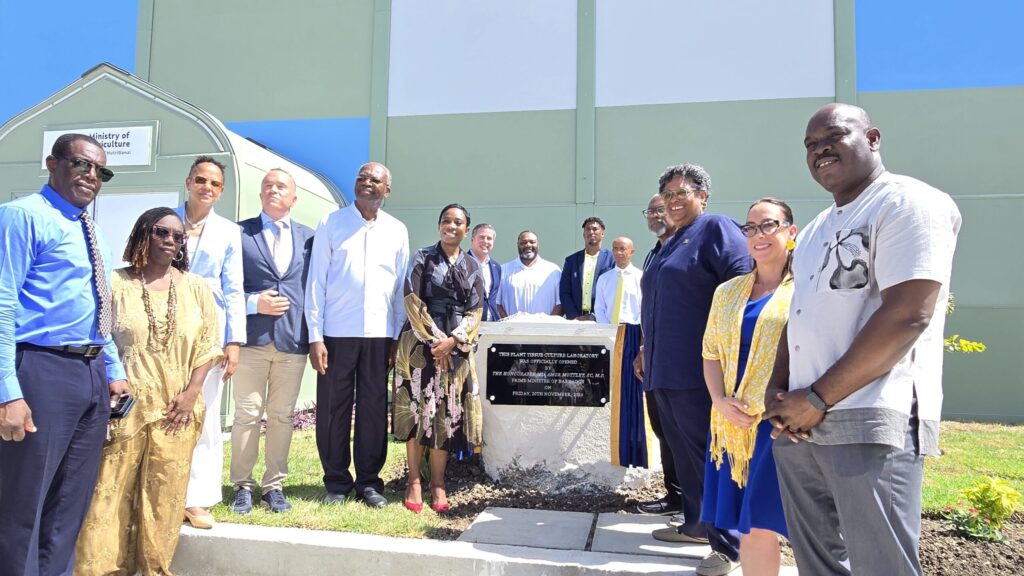
Barbados has officially unveiled a state-of-the-art Plant Tissue Culture Laboratory at the Home Agricultural Station in St Philip, marking a significant step in the government’s effort to build resilience in the nation’s food system. The facility was opened in the presence of representatives from regional and international organizations, as well as officials from Canada and Suriname, underscoring the project’s broader regional importance.
Prime Minister Mia Mottley used the occasion to sound an alarm about the island’s food security vulnerabilities. According to Barbados Today, Mottley warned that prolonged shipping disruptions—such as a two or three-week halt in deliveries from Miami—could quickly trigger food shortages, given that most fresh produce arrives on a seven-day supply chain. She stressed that the government has prioritized building infrastructure to reduce this dependency and create a more resilient food supply.
The laboratory forms part of a comprehensive strategy to improve agricultural productivity through research, enhanced planting materials, and the preservation of important crop varieties. Mottley noted that the germplasm facility will serve the wider Caribbean region, positioning Barbados as a hub for agricultural innovation. She also drew historical parallels to World War II-era legislation that required plantations to dedicate a portion of their land to food crops, suggesting that similar strategic thinking is needed today.
Mottley linked food security directly to public health, emphasizing that greater access to locally grown root crops and vegetables is critical as Barbados battles diabetes and other chronic non-communicable diseases. She argued that reducing reliance on packaged and processed foods would lower healthcare costs while improving population health outcomes. The Prime Minister also highlighted the need to diversify Barbados’ food sources through partnerships with Guyana, Suriname, and Venezuela, leveraging the island’s historic role as a regional hub to amplify demand and reduce production costs.
While Mottley reaffirmed the government’s commitment to the sugar industry, she acknowledged that the sector requires fundamental restructuring. She maintained that scientific research and investment in agricultural innovation will be essential to improving the industry’s competitiveness and yields. Throughout her remarks, the Prime Minister stressed that food security can no longer be taken for granted, particularly given the country’s limited fiscal space and the mounting threats posed by hurricanes and global supply chain disruptions.
Barbados has long relied heavily on imported food, with the majority of fresh produce arriving via a seven-day supply chain primarily from Miami. The island’s vulnerability to shipping disruptions and natural disasters has prompted the government to prioritize agricultural research and domestic production as key components of national resilience strategy.
This development is significant across the Caribbean, as the Plant Tissue Culture Laboratory will serve the wider region and support food security efforts beyond Barbados. The facility addresses challenges common to island economies—import dependency, supply chain vulnerability, and the need to balance agricultural modernization with public health concerns. The laboratory’s regional focus and partnerships with Guyana, Suriname, and other Caribbean nations demonstrate how agricultural innovation can strengthen food systems across the region.