
EDITORIAL REVIEW REQUIRED — EXPRESS DRAFT. This is an unpublished draft. Some claims may be unconfirmed. Check dates, sources, claims, photographs, and video rights before publishing.
Haiti’s 400 Mawozo gang has made an unusual move toward dialogue, contacting the National Commission for Disarmament, Demobilization, and Reintegration to explore possibilities for peace and national reconciliation. In a three-page statement, the gang emphasized that engaging in dialogue represents an "act of patriotic responsibility to preserve human lives" rather than a surrender of its position, according to reporting by The Haitian Times.
The outreach arrives amid ongoing military operations against armed groups throughout Haiti. Haitian Prime Minister Alix Didier Fils-Aimé announced that a gang leader known as Mathias, who operated from the gang-controlled Cité Soleil slum in Port-au-Prince, was killed in a joint law enforcement operation. The gang’s leadership has proposed that all relevant military forces suspend operations in certain areas to create space for meaningful peace negotiations and de-escalation efforts.
The gang’s statement also raised concerns about threats directed at the home of its leader, Wilson Joseph, known as Lanmò Sanjou, particularly following comments attributed to El Salvadoran President Nayib Bukele on social media. The gang invoked international humanitarian law, referencing the Geneva Conventions and the United Nations Charter in calling for protection of civilian property and populations during any de-escalation period.
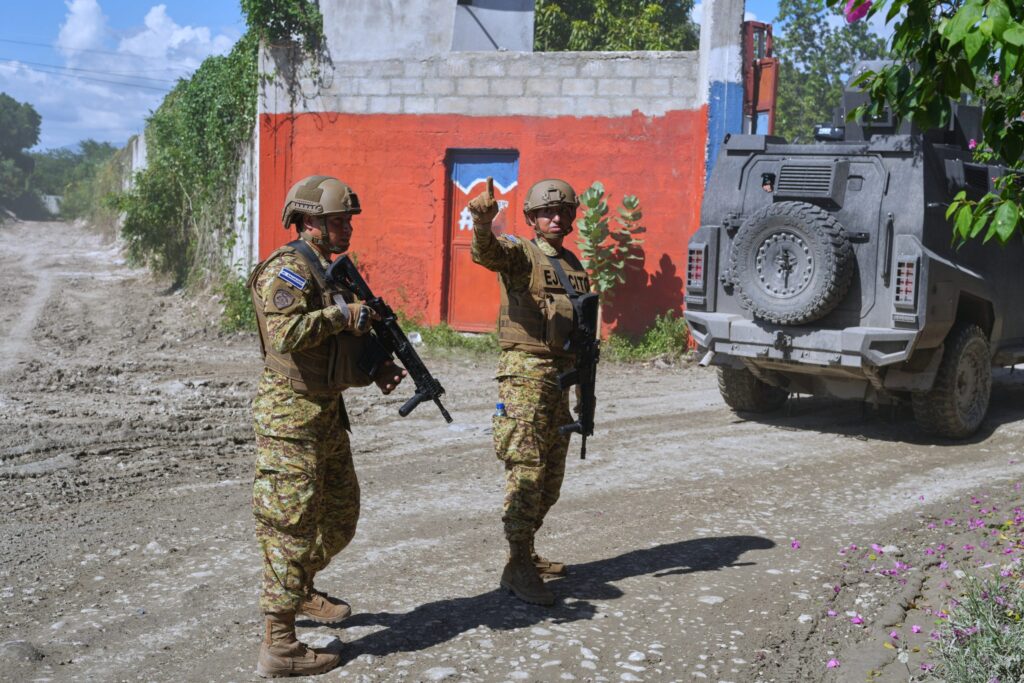
When asked whether the gang would lay down its weapons, a spokesperson indicated willingness to engage in peace negotiations while characterizing disarmament as a gradual process. The spokesperson also stated that the gang seeks an end to what it describes as "international interference," a reference to the deployment of more than 2,000 Salvadoran troops to Haiti following the disappearance of four Salvadoran aviation technicians in mid-October.
Haiti’s National Commission for Disarmament confirmed receiving contact from a representative of the armed group but stated that any dialogue must follow the roadmap established by the government and coordinated with the prime minister’s office. The commission’s cautious response reflects the complexity of negotiating with armed groups while security operations continue across the country.
Haiti has faced escalating gang violence and instability, prompting international military intervention. El Salvador deployed troops following the disappearance of four of its aviation technicians in gang territory on October 18. The United Nations has noted that most Salvadoran personnel operate outside the U.N.-backed gang suppression framework that works alongside Haiti’s police and military, as well as private security firm Vectus Global.
Haiti’s gang violence and the international military response directly affect regional stability and security. The involvement of El Salvador and private security contractors in Haiti’s internal security matters raises questions about sovereignty and regional cooperation that concern Caribbean nations and diaspora communities invested in Haiti’s future.
Sources and attribution
- The Haitian Times
- Powerful Haitian gang reaches out to government disarmament …
- El Salvador pledges more than 2,000 soldiers as Haiti delays elections
CVCA Express Draft: verification pending; WordPress publication is manual.