
EDITORIAL REVIEW REQUIRED — EXPRESS DRAFT. This is an unpublished draft. Some claims may be unconfirmed. Check dates, sources, claims, photographs, and video rights before publishing.
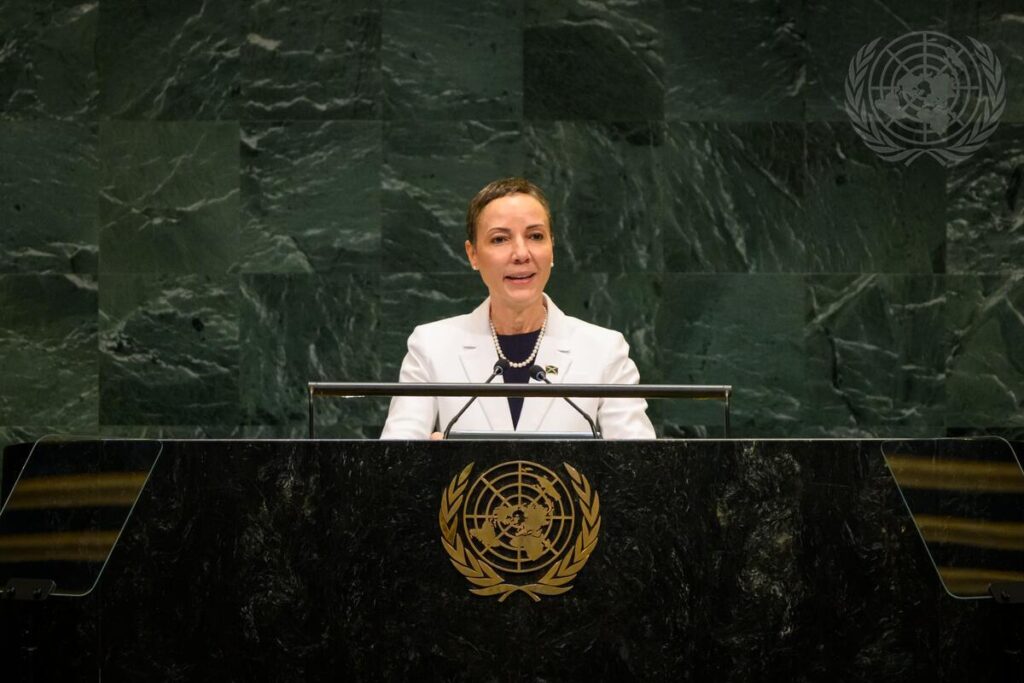
Jamaica has thrown its weight behind the United Nations Security Council’s decision to extend the mandate of Haiti’s Gang Suppression Force, signaling the region’s commitment to supporting its neighbour’s path toward stability. According to the Jamaica Observer, Foreign Minister Senator Kamina Johnson Smith delivered Jamaica’s backing during high-level discussions at the UN General Assembly, emphasizing that sustained international support is essential to make the force more effective in its mission to neutralize armed gangs, protect critical infrastructure, and facilitate humanitarian access.
The GSF, which operates alongside Haiti’s National Police, remains significantly understaffed. As of July, the force comprised just over 1,000 personnel drawn from Chad, Mongolia, Jamaica, Guatemala, El Salvador, and Sri Lanka—well short of its authorized strength. Johnson Smith cautioned that substantial gaps remain in troop contributions, logistics, airlift capabilities, and equipment. Jamaica itself has contributed personnel to the force and serves on the Standing Group of Partners, which provides strategic direction and helps mobilize resources.
The timing of the mandate renewal is particularly significant as Haiti prepares for elections scheduled to begin in December 2026. Johnson Smith underscored that marked improvements in security are necessary to enable a credible, inclusive, and peaceful electoral process. She warned that armed gangs cannot be allowed to dictate Haiti’s political future or that of the broader Caribbean region, and stressed that security must create space for humanitarian relief, development, and democratic governance led by the Haitian people themselves.
Beyond the GSF renewal, Jamaica has advocated for stronger enforcement of the UN arms embargo and sanctions regime on Haiti. Johnson Smith raised Haiti’s security crisis during multiple forums during UN high-level week, including meetings with Caricom counterparts, Latin American and Caribbean states, and at a Chatham House roundtable on Haiti’s recovery. The extended mandate runs through March 31, 2027, providing a window for the international community to demonstrate whether it can marshal the resources needed to support Haiti’s stabilization efforts.
The Gang Suppression Force was established to address Haiti’s severe gang violence crisis. Jamaica, as a Caricom member and regional leader, has been instrumental in advocating for international support for Haiti’s security and development. The force operates under UN Security Council authorization and works to create conditions for humanitarian access and political stability in Haiti.
As a Caricom nation and Haiti’s closest neighbour, Jamaica has a direct stake in Haiti’s stability. Gang violence in Haiti has regional spillover effects, affecting migration, trade, and security across the Caribbean. Jamaica’s leadership in calling for sustained international support reflects the region’s collective interest in preventing Haiti’s crisis from destabilizing the broader Caribbean community.
Sources and attribution
- Jamaica Observer
- UN / HAITI | UNifeed
- Haiti: Vote on a Draft Resolution Extending the Mandate of …
- UNSC Renews Haiti Gang Suppression Force for Six Months
- UN Security Council extends Haiti anti-gang force by 6 …
CVCA Express Draft: verification pending; WordPress publication is manual.