
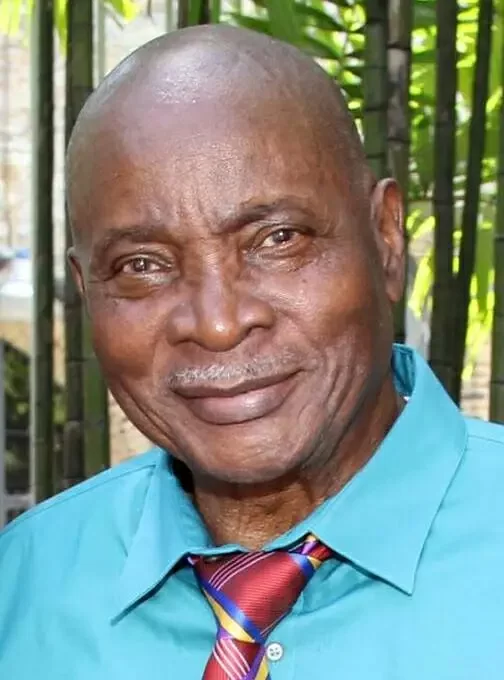
The legendary calypsonian who shaped generations of Caribbean culture through music, humor, and social commentary has passed away in New York.
The Caribbean has lost one of its most distinctive cultural voices with the passing of The Mighty Sparrow, the calypsonian born Slinger Francisco who died Sunday in New York at age 91, according to Starnieuws. Born July 9, 1935, in Grand Roy, Grenada, Francisco moved to Trinidad as a child and grew up in Laventille near Port of Spain, where he began singing with local steelbands as a teenager.
Francisco’s breakthrough came in 1956 with “Jean and Dinah,” a song that captured the social and economic upheaval following the departure of American military bases from Trinidad. The track earned him both the Calypso Monarch and Road March titles, launching a career that would span more than seven decades. Over that time, he won the Calypso Monarch or Calypso King title eight times, the Road March eight times, and the Calypso King of Kings competition twice, establishing himself as one of calypso’s greatest practitioners.
What set Sparrow apart was his ability to blend infectious melodies with sharp social observation. His repertoire addressed politics, relationships, cultural shifts, and the realities of Caribbean life, delivered with humor and satirical wit that resonated far beyond Trinidad and Tobago. He performed extensively across the Caribbean, the United States, and internationally, with New York becoming a crucial base for his music and performances.
Sparrow’s connection to Suriname held particular significance. He recorded “Paramaribo” in 1998 on the album The Supreme Serenader, creating a musical tribute to the Surinamese capital that celebrated the country’s beauty and districts. The song became a recognizable part of his repertoire for many Surinamers and reflected his standing as a voice within broader Caribbean culture rather than simply a Trinidad-based artist. He performed in Paramaribo and built a devoted following across the region.
His cultural contributions earned widespread recognition. He received the Chaconia Gold Medal from Trinidad and Tobago, an honorary doctorate from The University of the West Indies, the Order of the Caribbean Community, and in 2015, the Officer of the Order of the British Empire (OBE). CARICOM recognized him as a social commentator and cultural ambassador whose work reflected the region’s politics, history, people, and social development. Jamaican Prime Minister Andrew Holness acknowledged Sparrow’s passing, noting that his music, humor, and commentary had been woven into Caribbean cultural life across multiple generations.
According to his family, Sparrow was surrounded by loved ones at the end of his life and reconnected with Christian faith, being baptized into the Seventh-day Adventist Church in his final days. His legacy endures not only in the calypso standards he recorded but in the generations of Caribbean people for whom his voice became inseparable from their own cultural identity.
Calypso emerged as a dominant musical and cultural form in Trinidad and Tobago, evolving from earlier folk traditions and becoming the soundtrack to Carnival celebrations and social commentary across the Caribbean. The genre’s practitioners, known as calypsonians, have long used their music to address political events, social issues, and everyday experiences, making them important cultural figures throughout the region.
The Mighty Sparrow’s death marks the loss of one of the Caribbean’s most recognizable cultural ambassadors. His music shaped the identity of multiple generations across the region, and his particular connection to Suriname through songs like “Paramaribo” demonstrates how Caribbean artists have woven together the cultural fabric of island and mainland nations. His passing is significant for diaspora communities who grew up with his voice as part of their cultural heritage.
Written & Edited by Orlyn Edwards. Published by Caribbean Air Force Media.
Category: Culture · Island routing: Suriname